
Products / PVC Additives
PVC Processing Aids (ACR)
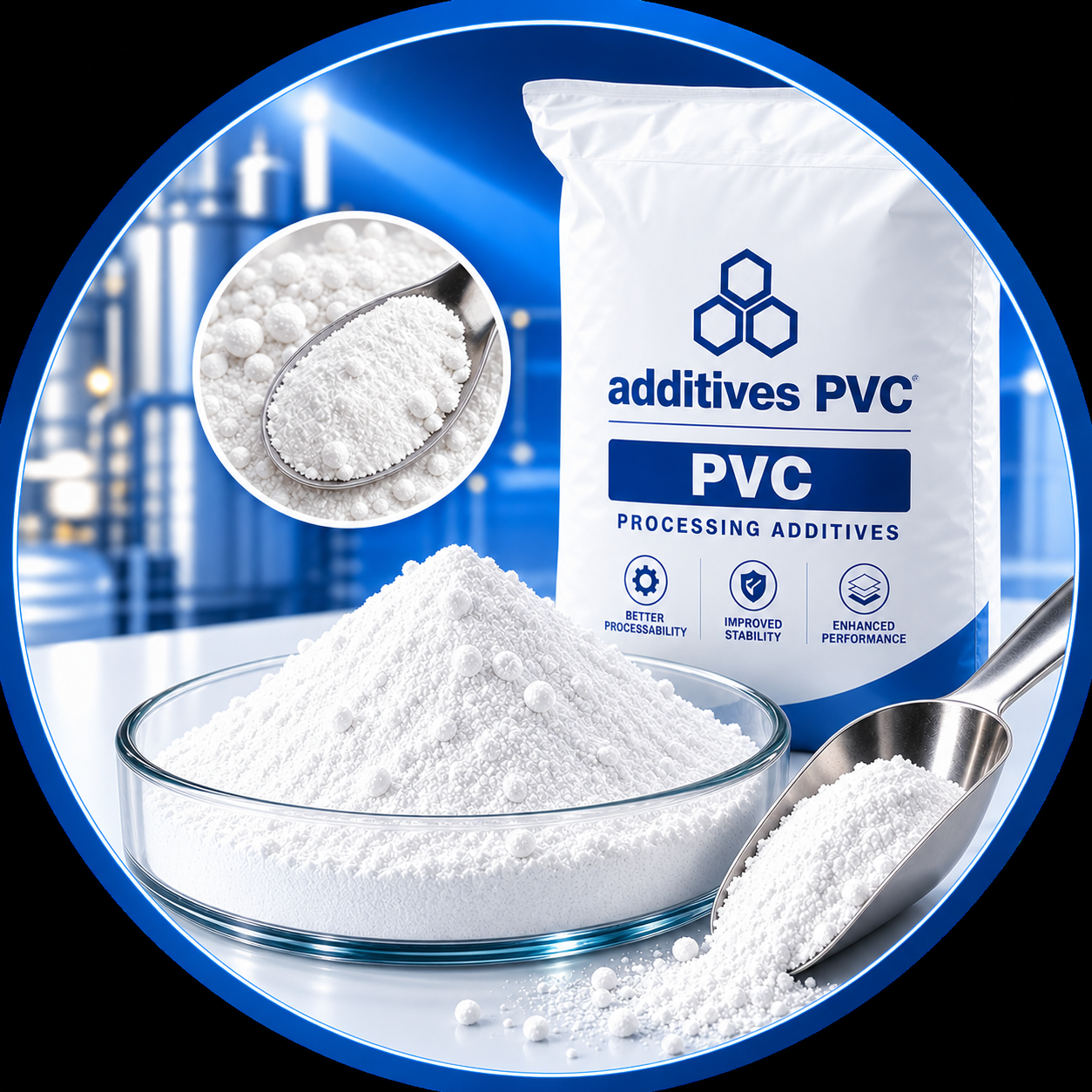
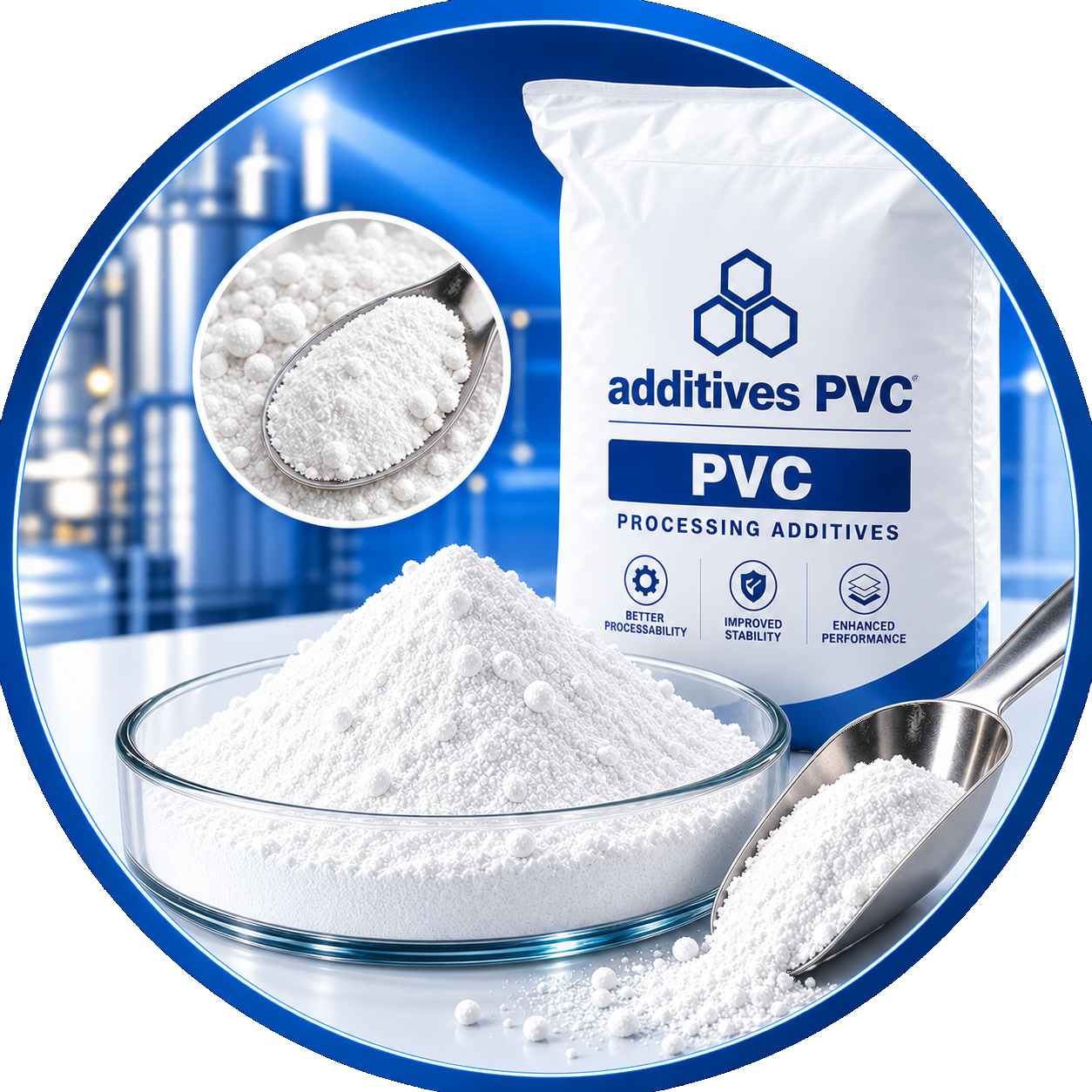
Acrylate-based (ACR) processing aids that improve PVC melt fusion, cohesion, and surface finish across film, sheet, profile, pipe, foam board, and injection-moulded parts. Seven grades spanning general-purpose to high-molecular-weight foaming and clarity chemistries, selected by intrinsic viscosity and molecular weight to match your process.
Choose a family
Three chemistries, selected by intrinsic viscosity
Intrinsic viscosity tracks molecular weight, and molecular weight decides how much melt strength the additive contributes and how readily it disperses. Higher is not better — it is different.
ACR
IV 0.50 – 9.50
The widest span in the range. Covers everything from a low-viscosity dispersion aid to a high-viscosity fusion promoter. Start here unless the line says otherwise.
SAN
IV 4.50 – 16.50
Styrene-acrylonitrile based. Higher melt strength at a given loading. Calendering, blow moulding, and any process where the melt must not sag.
Acryl-AS
IV 12.50 – 16.50
Narrow and high. Maximum melt strength for foam, thick sheet and deep-draw thermoforming.
Send us the intrinsic viscosity of the aid you buy today and the process it runs on. We will name the matching grade rather than propose the nearest one in stock.
Grade range
Seven ACR grades, selected by molecular weight and viscosity
Values below are the published technical indicators. Send your process conditions (line type, target fusion time, clarity requirement) and we will confirm the recommended grade and dosage.
| Grade | Intrinsic viscosity η (25 °C) | Weight avg. molecular weight | Molecular distribution | Density (g/cm³) | Volatile (%) | Residue on sieve (30 mesh, %) |
|---|---|---|---|---|---|---|
| CV-PA-20 | 2.80–3.20 | (4.500–6.500)×10⁶ | ≤1.250 | 0.45 ± 0.10 | ≤1.3 | ≤2.0 |
| CV-PA-551B | 2.00–3.00 | (3.800–5.000)×10⁶ | ≤1.100 | 0.45 ± 0.10 | ≤1.3 | ≤2.0 |
| CV-PA-312 | 0.50–1.00 | (1.000–2.000)×10⁶ | ≤1.150 | 0.45 ± 0.10 | ≤1.5 | ≤2.0 |
| CV-PA-320 | 6.50–7.50 | (1.500–2.000)×10⁶ | ≤1.250 | 0.45 ± 0.10 | ≤1.5 | ≤2.0 |
| CV-PA-417 | 6.50–7.50 | (1.500–2.000)×10⁶ | ≤1.250 | 0.45 ± 0.10 | ≤1.3 | ≤2.0 |
| CV-PA-418 | 5.00–6.00 | (1.300–1.500)×10⁶ | ≤1.650 | 0.45 ± 0.10 | ≤1.3 | ≤2.0 |
| CV-PA-419 | 8.50–9.50 | (2.000–3.500)×10⁶ | ≤1.250 | 0.45 ± 0.10 | ≤1.3 | ≤2.0 |
Figures are specification limits. Actual lot values are stated on the Certificate of Analysis supplied with each shipment.
The chemistry
ACR processing aid range
Acrylate copolymers that control the fusion behaviour of PVC. Added at low loading, they shorten fusion time, homogenise the melt and raise melt strength — which translates on the line into a more stable output, a better surface and fewer rejects.
Supplied as free-flowing white powder for transparent film, rigid sheet, profile, pipe and fittings, foam board, WPC, building formwork and injection-moulded parts.
What the additive does on your line
Efficient at low dosage
Limited impact on formulation cost for the performance gained.
Fast fusion, lower temperature
Good cohesion and melt homogeneity without pushing the barrel.
Narrow MW distribution
Narrow molecular weight distribution and high glass transition temperature.
Direct process control
Control over fusion time, plasticisation rate and thermal degradation.
Selection
How to choose
Molecular weight drives the effect. Higher molecular weight grades promote fusion and build melt strength — the direction to take for foam board, thick sheet and formwork. Lower molecular weight grades act mainly on flow and surface, which suits transparent film, calendered sheet and injection moulding.
Send us your application, your line type and your current processing aid, and we will point you to the matching grade before you order.
Adjacent chemistries
SAN and Acryl-AS ranges
SAN processing aids
Styrene-acrylonitrile based. The high-viscosity grades shorten fusion time and raise melt strength more sharply than an equivalent ACR, which is what a calendering or blow-moulding line needs when the melt has to hold its shape. The lower-viscosity grades trade some of that melt strength for easier dispersion.
| Grade | Intrinsic viscosity, 25 °C | Weight average molecular weight |
|---|---|---|
| CV-SAN-502 | 12.50–16.50 | (7.500–9.500)×10⁶ |
| CV-SAN-503 | 12.50–16.50 | (7.500–9.500)×10⁶ |
| CV-SAN-506 | 6.50–8.50 | (5.500–6.500)×10⁶ |
| CV-SAN-507 | 4.50–5.50 | (3.500–4.500)×10⁶ |
| CV-SAN-507-1 | 5.50–6.50 | (3.500–4.500)×10⁶ |
Acryl-AS processing aids
An acrylic-AS composite. Both grades sit at the top of the viscosity range with the widest molecular weight span published here, which is where they earn their place: maximum melt strength for foam, thick sheet and deep-draw thermoforming.
Supply
Packaging & storage
| Bag | 20 kg / 25 kg PP valve bag with liner, or kraft paper bag |
| Bulk | 500 kg / 1000 kg jumbo bag |
| Pallet | Fumigation-free pallet |
| Shelf life | 24 months, stored cool and dry in unopened packaging |
Support
Technical support
Grade matching, formulation optimisation and line-trial support are available through our technical desk. Send your current recipe and your processing conditions and we will propose a starting formulation before you commit to a container.
Send your specification.
Tell us your line, your fusion target and the aid you run today — we come back with a grade, a dosage and a landed price.